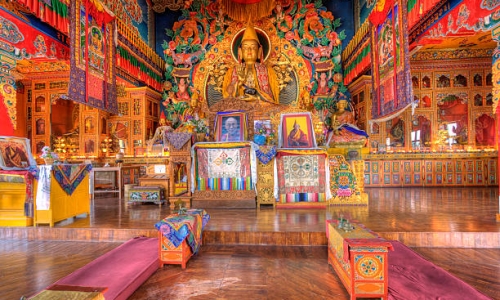


A spiritual journey to India and Nepal is more than just a trip; it's a quest to find one's roots, explore profound spiritual values, and experience unique cultures. A visa is the first gateway to this precious opportunity. This article will accompany you, providing a detailed and inspiring guide to pilgrimage visa application procedures, bringing your dream of stepping onto the land of the Buddha, the sacred land, closer than ever.
Understanding India and Nepal Pilgrimage Visas
Before preparing your application, it's crucial to understand the type of visa you need. For those wishing to undertake a pilgrimage, choosing the right visa will ensure your journey is smooth and purposeful.
Indian Pilgrimage Visa
India, the birthplace of Buddhism and numerous ancient civilizations, attracts millions of devotees and tourists annually. For spiritual journeys, the most common visa types are the Tourist Visa or Business Visa if you are involved in religious activities with diplomatic or cultural exchange aspects. However, to fulfill pilgrimage purposes, you need to pay attention to specific points when applying for these visas.
An Indian Tourist Visa is typically valid for 6 months, allowing multiple entries. Although there isn't an official "pilgrimage" visa, you can certainly use a tourist visa for this purpose. The key is to clearly state your travel plans in your visa application and during any interviews, including the spiritual sites you intend to visit, such as Bodh Gaya, Sarnath, Kushinagar, Lumbini (in Nepal but near the Indian border), or Hindu holy sites like Varanasi and Rishikesh.
In some special cases, if the trip is large-scale, organized by a reputable religious institution, or sponsored by diplomatic agencies, other visa types might be considered. However, for most Vietnamese citizens, a tourist visa is the most feasible and common option.
Nepal Pilgrimage Visa
Nepal, home to Lumbini National Park where Lord Buddha was born, is an indispensable spiritual destination for any pilgrimage. The visa application process for Nepalese visas for Vietnamese citizens is usually quite simple, and you can obtain it upon arrival at the airport or through an electronic visa (e-Visa).
Nepalese tourist visas come with various duration options: 15 days, 30 days, or 90 days. For extended pilgrimage journeys, consider a 30 or 90-day visa to allow ample time for exploration and reflection. Visas can be extended at the Department of Immigration in Kathmandu.
When applying for a Nepalese visa, you will need a passport valid for at least 6 months, a recent portrait photo, and a visa application form. Information about your accommodation and travel plans are also important details to provide.
Preparing Your Indian Pilgrimage Visa Application
Completing your application thoroughly and accurately is the first step to ensuring a smooth visa process. Here are the essential documents you need to prepare.
1. Passport
- Original passport valid for at least 6 months from the intended date of entry into India.
- Passport must have at least 2 blank pages for the visa.
- Photocopy of your passport's information page.
2. Visa Application Form
- You must fill out the online visa application form completely and accurately on the official website of the Indian Embassy/Consulate in Vietnam or authorized portals.
- Be sure to select the correct visa type (Tourist Visa) and truthfully declare your purpose of travel as spiritual pilgrimage.
- After completion, print the form, sign it, and submit it with other documents.
3. Passport-Sized Photographs
- 02 color photos, 5x5 cm, white background, taken within the last 6 months.
- Photos should be front-facing, without glasses (unless medically necessary with a doctor's note), no hats, and in modest attire.
4. Proof of Financial Means
- Bank statements for the last 3-6 months, showing sufficient funds to cover your trip expenses.
- Bank statement confirming balance with an official bank stamp.
- If your trip expenses are covered by someone else, a financial sponsorship letter along with their ID and proof of financial means is required.
5. Detailed Travel Itinerary
- This is a critically important section for a pilgrimage visa.
- Create a day-by-day plan, detailing:
- Estimated flight dates and times.
- Places to visit (including spiritual sites).
- Accommodation information (hotels, guesthouses, or contact details if staying at monasteries/temples).
- Ensure logical connections between locations to demonstrate the coherence of your journey.
6. Round-Trip Flight Tickets
- Provide confirmation of your round-trip flight booking to India.
- For combined India-Nepal itineraries, you might need to provide flight tickets between the two countries or international return tickets to Vietnam.
7. Cover Letter (Highly Recommended)
- Write a clear and concise letter explaining your purpose of travel as a spiritual pilgrimage.
- Emphasize the spiritual significance of the trip for you.
- Assure them that you will abide by Indian laws and have no intention of working or overstaying.
- This letter helps the Embassy understand your motivations better and can be a deciding factor.
8. Other Documents (If Applicable)
- Family relationship documents (if traveling with relatives).
- Confirmation letter from a reputable religious organization for participating in a pilgrimage (if applicable).
- Business license (if you are a business owner), employment contract, leave application (if employed).
- Student ID card, student confirmation letter (if a student).
Indian Visa Application Submission and Interview Process
After preparing all necessary documents, you need to follow the submission process and may be required to attend an interview.
1. Schedule an Appointment for Submission
- Most Indian Embassies/Consulates require an online appointment before submitting your application.
- Visit the official website of the Indian Embassy/Consulate or the authorized visa application center to book your appointment.
2. In-Person Submission
- Arrive at the submission center at your scheduled time.
- Bring all original and photocopied documents.
- The staff at the center will review your application.
3. Pay Visa Fees
- Visa fees are paid at the time of application submission.
- The fee may vary depending on the visa type and duration.
- Typically, the fee for a 6-month multiple-entry tourist visa can fluctuate.
4. Biometrics Collection (Fingerprints and Photo)
- In some cases, you may be required to provide fingerprints and have your photo taken at the application center.
5. Visa Interview (If Required)
- Not all applicants are interviewed, but you should be prepared.
- If called for an interview, you will be asked about your travel purpose, itinerary, finances, and connection to India.
- Answer truthfully, confidently, and clearly.
- Reiterate your spiritual pilgrimage purpose and your respect for the culture and religion.
6. Track Your Application and Receive Results
- After submitting your application, you can track its status online.
- Indian visa processing times typically range from 5-10 working days, depending on the case and submission period.
- Once you receive notification that your visa has been approved, you will collect your passport with the visa affixed from the designated location.
Preparing Your Nepalese Visa Application
Nepalese visas for Vietnamese citizens are generally easy to obtain. You can choose to apply upon arrival or get an e-Visa beforehand.
1. Visa On Arrival
This is the most common and convenient option for Vietnamese travelers.
Documents Required:
- Original passport valid for at least 6 months.
- 1 passport-sized photo (4x6cm or 5x5cm), white background, taken within the last 6 months.
- Visa application form (to be filled at the counter).
- Visa fee as per regulations (usually payable in USD).
- 15-day visa: approximately 30 USD
- 30-day visa: approximately 50 USD
- 90-day visa: approximately 125 USD
Process:
- After disembarking at Tribhuvan International Airport (KTM), proceed to the "Visa on Arrival" counter.
- Fill out the visa application form.
- Submit the form, photo, passport, and visa fee.
- Receive your visa and proceed through immigration.
2. Nepal Electronic Visa (e-Visa)
You can apply for a Nepalese e-Visa before your trip through the official portal of the Nepal Department of Immigration.
Process:
- Visit https://www.immigration.gov.np/
- Fill out the e-Visa application form completely.
- Upload your passport photo and scan of your passport.
- Pay the visa fee online using a credit/debit card.
- You will receive a confirmation email with a reference number. Present this number upon arrival in Nepal.
Advantage of e-Visa: Saves time at the airport, allows for pre-trip preparation.
Note: The e-Visa fee is equivalent to the visa on arrival fee.
Combined India-Nepal Pilgrimage: Important Considerations
Many people choose to combine both countries in one pilgrimage for a more complete experience. Here are some points to keep in mind:
1. Logical Itinerary
- Arrange the order of destinations logically in terms of geography and travel time.
- For example: If flying to India first, you might start your pilgrimage at Buddhist sites in the north (Bodh Gaya, Sarnath, Kushinagar), then travel to Nepal to visit Lumbini, before returning to India or flying home.
- Or vice versa, fly to Nepal first, visit Lumbini, then proceed to India for pilgrimage.
2. Visas & Flights Between Countries
- Ensure you have a valid Indian visa for re-entry if you plan to return to India.
- Research flights or other transportation options (buses, trains) connecting India and Nepal.
- Some people opt to fly from major Indian cities (like Delhi, Kolkata) to Kathmandu (Nepal) and vice versa.
3. Health and Safety
- Consult your doctor about necessary vaccinations before traveling.
- Pack personal medications, insect repellent, and sunscreen.
- Always prioritize personal safety and secure your belongings.
4. Culture and Customs
- Learn about local customs and traditions to show respect.
- Dress modestly when visiting religious sites.
- Learning a few basic phrases in local languages (Hindi, Nepali) can be very helpful.
Tips for a More Fulfilling Spiritual Journey
A visa is just a means; the destination is what matters. To make your pilgrimage truly meaningful, consider these:
1. Mental Preparation
- Read books and learn about the history and significance of the places you will visit.
- Practice meditation or other spiritual exercises before your trip.
- Open your mind to new experiences and profound lessons.
2. Choose Reputable Services
- Look for travel agencies experienced in organizing spiritual tours and pilgrimages to India and Nepal.
- These companies usually have guides knowledgeable about culture and religion, and can assist you throughout your journey, including visa matters, transportation, and accommodation.
- Opting for a package tour (including flights, hotels, visas, and guides) can save you time and reduce preparation stress.
3. Live Fully in the Moment
- Temporarily set aside the worries and bustle of everyday life.
- Enjoy every moment, listen to your inner voice, and connect with the sacred energy of the land.
- Record your emotions and valuable lessons through a journal, photos, or by conversing with fellow travelers.
Conclusion
While obtaining an India and Nepal pilgrimage visa requires meticulous preparation, it is entirely achievable. With an understanding of the procedures, complete document preparation, and an open heart, the gateway to these sacred lands will open for you. The journey will not only offer unique cultural and historical experiences but also a precious opportunity to find inner peace, refresh your soul, and carry eternal spiritual values with you.
Wishing you a meaningful pilgrimage filled with blessings!
CONTACT INFORMATION:
Dzogchen Travel Co., Ltd.
Address: 151-153 Phu Tho Hoa Street, Phu Tho Hoa Ward, HCMC
Hotline: 0833939768
Phone: 0833939768
Email: xuan@dzogchentravel.com
Website: dzogchentravel.com